
Coleman Unit Release Outcomes
Gregory S. Coleman Unit is part of the Texas Department of Criminal Justice Correctional Institutions Division. A person may leave the unit for parole, mandatory supervision, discharge, transfer to another TDCJ unit, or transfer to another authority. Only parole, mandatory supervision, and discharge are community-release outcomes. Parole is a discretionary exit from prison to serve the balance under supervision. Mandatory supervision is a separate form of supervised release governed by statutory time-credit rules and, for some cases, Board review. Discharge means the responsible record shows the sentence or supervision term has ended.
A transfer does not end incarceration. Search the receiving unit or agency and describe the result as release from Coleman Unit only when that limited statement is accurate. A projected release date is also not proof of exit. It is an estimate calculated from sentence and time-credit information, and it can change. The Caldwell County released inmate search routes county jail, state prison, federal, and immigration cases to their correct systems.
Coleman Unit Offender Search
Use the TDCJ inmate search while the person is incarcerated. The live tool is expressly current-custody only. Search by an exact last name and first initial, TDCJ number, or SID; gender and race may help narrow a name search. A current detail may show the unit, offenses, projected release date, and parole-review information. Save the TDCJ number and access date because they make later requests easier.
| Search item | Use |
|---|---|
| Last name and first initial | Name route for current TDCJ incarceration |
| TDCJ number | Strong identifier for a current detail and later record request |
| SID | State identifier that can distinguish similar names |
| Projected release date | Current estimate, not proof that release occurred |
| Parole review information | Decision-process context, not a physical exit record |
Read the whole detail rather than extracting one date. Compare projected release, maximum expiration, parole information, current unit, and any scheduled release location shown. If the record later vanishes, do not announce a release. Former prisoners are expected to leave this current-only search. TDCJ incarceration history, a release certificate, and the parole or discharge record provide the after-release trail.
Confirm Coleman Unit Release
The correct proof chain changes with the stage of the case. TDCJ gives current custody and calculation data. The Texas Board of Pardons and Paroles makes parole and applicable mandatory-supervision decisions. TDCJ Review and Release Processing implements eligible releases. The Parole Division supervises the person afterward when release remains conditional. Caldwell County CSCD handles county community supervision, commonly called probation, and is not a substitute for the state parole channel.
- Review and preserve the current TDCJ detail while the person remains incarcerated.
- Check the BPP result or call 844-512-0461 for pre-vote and parole-review information.
- After a favorable vote, call TDCJ release processing at 512-406-5202 for current implementation status.
- Request incarceration history and the release certificate or discharge record from TDCJ.
- If release is supervised, identify and verify the responsible TDCJ Parole Division office.
If BPP records show an FI, or favorable action, while TDCJ still places the person at Coleman, both records can be correct. The action may specify a future month, required program, approved release plan, or other condition. The post-vote line and eventual certificate are stronger evidence of physical exit than the vote alone. Confirm again on or after the projected date.
Coleman Unit Release Certificate
After a former prisoner no longer appears in the live search, use the TDCJ email information channel for factual incarceration history. Include the full name and TDCJ number. Without that number, use the exact birth date or approximate age and county of conviction. Ask separately about the recent term and prior history because the agency distinguishes them.
For documentary proof, submit a formal request through the TDCJ open-records request page. Describe the sentence term and date range, then request the existing release certificate, discharge record, and incarceration-history entries showing release date and release type. Do not ask the agency to create an eligibility calculation or declare a person free of all obligations. The certificate and parole record can distinguish supervised release from sentence discharge.
The TDCJ request channel is shown below because Coleman release records belong to the state system.
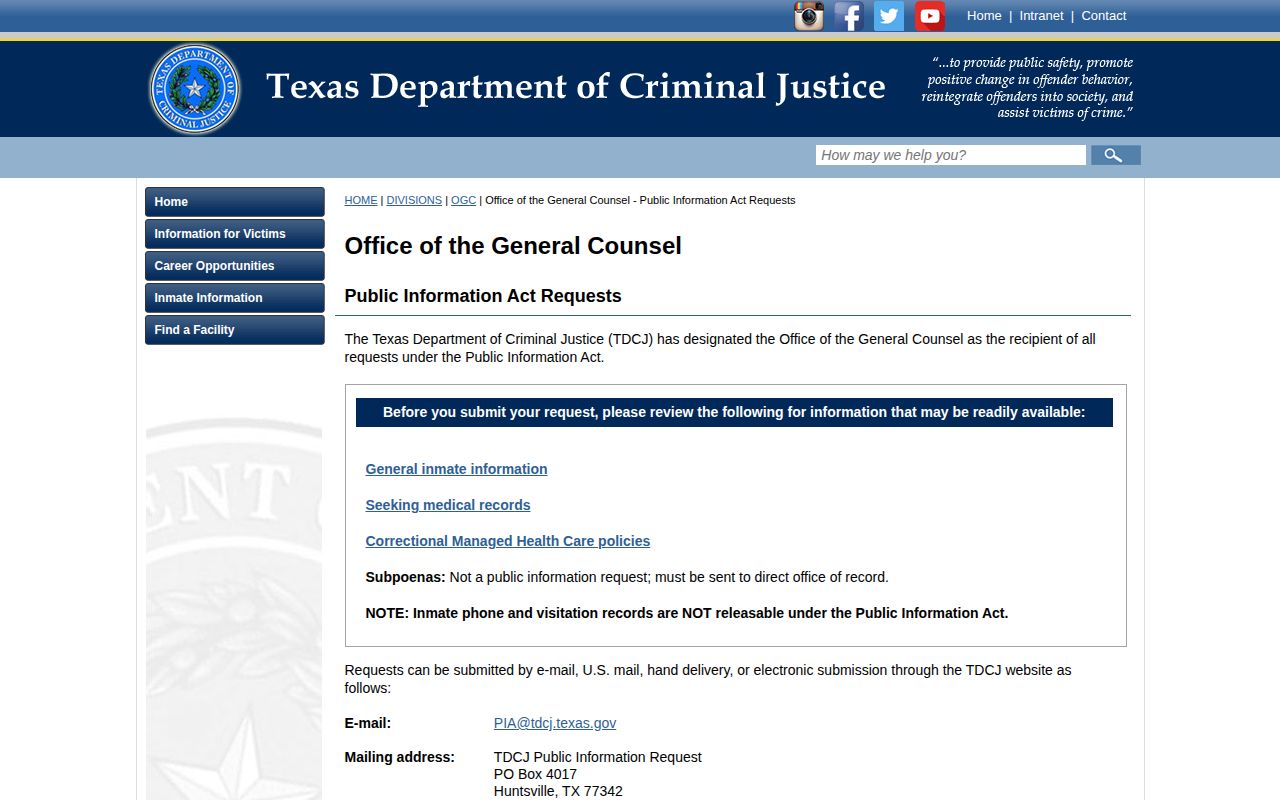
This source provides the route for requesting the state release certificate and related history after the live offender result is gone.
Coleman Unit Release Contacts
The unit can answer facility-specific questions, but release decisions and official records follow TDCJ and BPP channels. No separate public release-counter schedule was established in the research. Confirm any visit or pickup plan with the responsible unit or release-processing office rather than relying on a projected date.
Gregory S. Coleman Unit1400 Industrial Boulevard
Lockhart, TX 78644
512-398-3480 TDCJ Information
936-295-6371 or 800-535-0283
BPP pre-vote: 844-512-0461
Post-favorable release processing: 512-406-5202
Public information: PIA@tdcj.texas.gov
Use the pre-vote number for parole-review information. Use the post-favorable number when the Board has acted but physical release has not been confirmed. General TDCJ lines can route an offender-information question. A supervising office becomes relevant only after parole or mandatory supervision begins, while a discharge record should show the end of the sentence or supervision.
Coleman Unit Facility Facts
The official Coleman Unit directory identifies a female state-prison facility with capacity for 1,000 people. Management & Training Corporation operates the institution under contract for TDCJ. It is physically located in Caldwell County, but it is not Caldwell County Jail. The Sheriff's IVSS and county release-sheet process should not be used as the sole proof for a Coleman state-prison release.
The official unit directory appears below as the facility source.
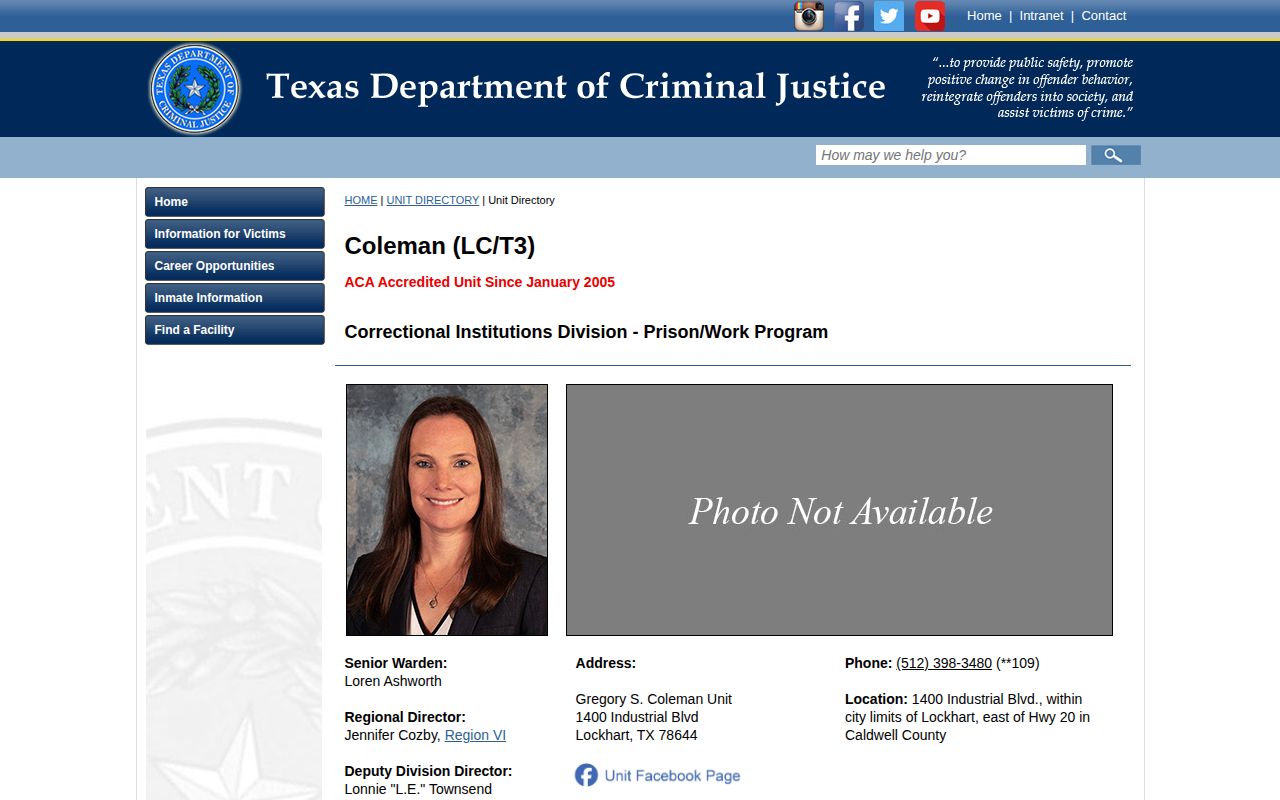
The directory confirms the state operator, population designation, address, telephone, and capacity that distinguish Coleman from the county jail.
Coleman Release Type Differences
The label attached to a Coleman departure matters. Parole permits a person to serve the remaining term under supervision after a discretionary BPP decision and TDCJ processing. Mandatory supervision is also supervised release, but its eligibility and review rules differ. Neither should be described as full discharge. A discharge ends the sentence or supervision reflected by the responsible agency, while a transfer merely changes the place or custodian.
| Event | Custody meaning | Best confirming source |
|---|---|---|
| Parole | Community release under state supervision | BPP result, release certificate, Parole Division |
| Mandatory supervision | Statutory supervised release when applicable | TDCJ and BPP records, release certificate |
| Discharge | Sentence or supervision ends in the state record | TDCJ discharge record and history |
| Unit transfer | State incarceration continues elsewhere | TDCJ current detail and receiving unit |
| Agency transfer | Another authority continues custody | Transfer record and receiving agency |
A parole vote may include conditions, and Review and Release Processing checks the release plan, residence rules, discipline, programs, special conditions, mandatory-supervision criteria, and any registration requirements before a certificate is issued. That is why the decision date, projected date, and physical departure date may differ. Keep each date tied to its source and meaning.
Coleman Projected Release Changes
TDCJ defines a projected release date through its sentence and time-credit calculation. It is not a promise. Good-conduct time, forfeiture of credit, a changed calculation, court action, detainers, parole eligibility, mandatory-supervision eligibility, programs, and approved plans can affect the path. Texas rules vary by offense and offense date, so a simple percentage should not be applied to every Coleman sentence.
If BPP shows a denial while a prior projected date remains in a saved record, use the current TDCJ calculation and official case contact. Depending on eligibility, the date may move toward maximum expiration. If BPP shows a favorable result but custody continues, contact release processing. The Caldwell County projected release date page explains the calculation sources and why actual release can differ.
- Projected release
- TDCJ's current estimate based on sentence and time-credit data.
- Maximum expiration
- The sentence endpoint before any separate legal changes.
- Parole
- Discretionary supervised release after Board action and implementation.
- Mandatory supervision
- Supervised release under applicable statutory time-credit and review rules.
- Discharge
- The end of the sentence or supervision shown in the official record.
Two Caldwell Release Systems
Gregory S. Coleman Unit and Caldwell County Jail operate within Caldwell County, but their records cannot be swapped. TDCJ lists Coleman as a 1,000-capacity female state prison run under contract. The county's official medical-services request describes the Sheriff-operated jail as a 301-bed county facility. Capacity is context, not a count of releases.
A transfer from Caldwell County Jail into Coleman documents continued custody. It is not a community release. A person leaving Coleman on parole or mandatory supervision has left prison but remains under TDCJ supervision, while discharge generally marks the end of the state sentence. TDCJ history, BPP results, release processing, and the certificate supply the state proof. Sheriff, IVSS, county release sheets, and local court records supply the county-jail proof.
The TDCJ Public Information Act guidance confirms the correct records custodian for Coleman release material.
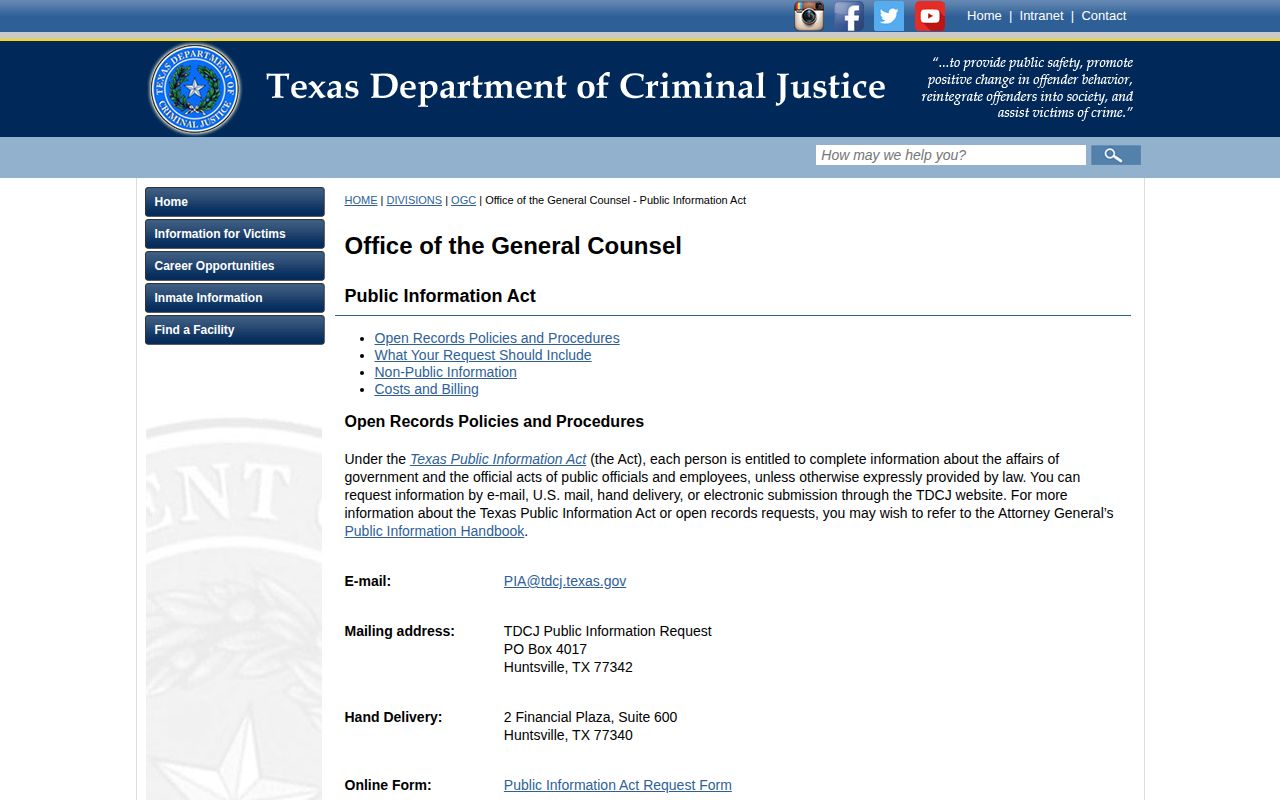
TDCJ remains the records authority for Coleman even though the prison is physically located in Lockhart.